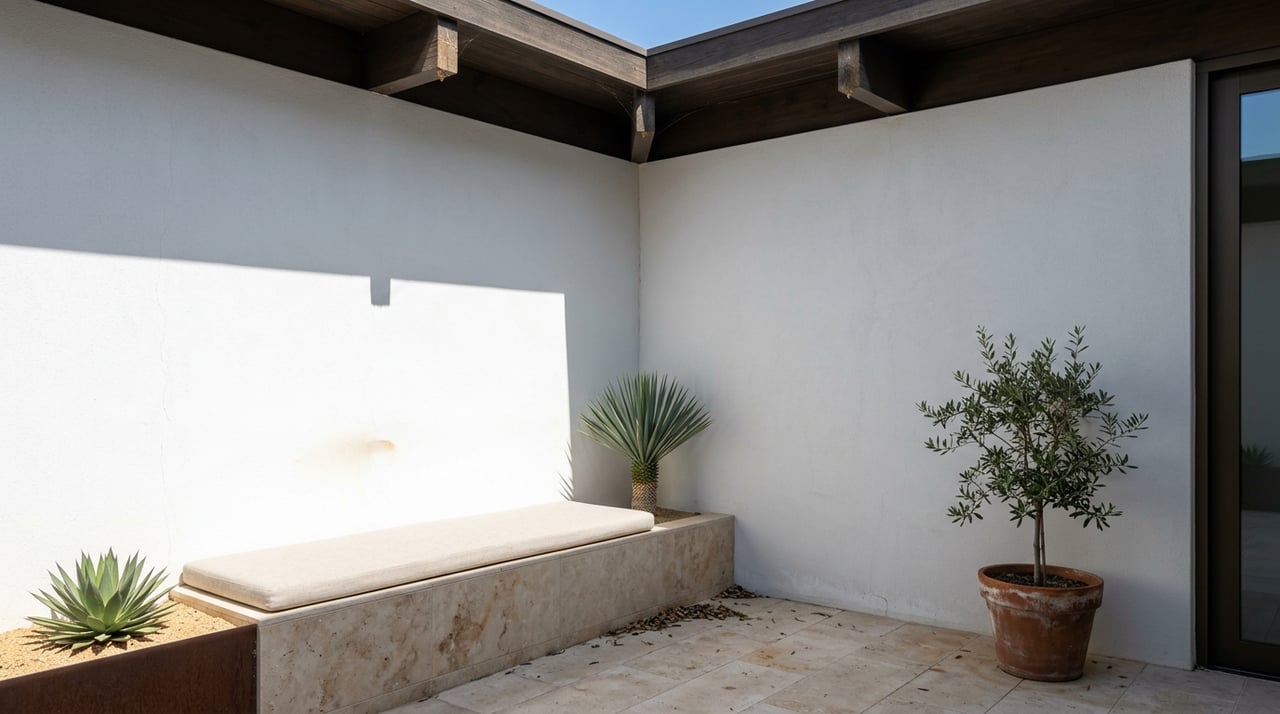
The El Pescadero Closing Costs That Shifted in 2026 (and the One Line Item Nobody Warns You About)
August 6, 2026
August 6, 2026
A buyer I know wired her deposit for a Pescadero casita in late January. She had budgeted using a closing-cost spreadsheet a friend built in 2024. When the notario's presupuesto landed in her inbox, she was roughly six thousand dollars short. Not because anyone had misled her. Because the math for buying on this stretch of the Pacific coast quietly changed on January 1, 2026, and most of the guides she had been reading were still running last year's numbers.
Here is the thesis worth carrying into your own closing: the ISABI hike everyone is talking about is the smallest of three things that shifted. The appraisal rule change and the ejido title trail specific to Pescadero decide whether the number on the presupuesto matches the number in your account.
Baja California Sur's Property Acquisition Tax, known locally as ISABI (elsewhere in Mexico as ISAI), used to run 2% of the taxable value. Los Cabos went first, jumping to 3% on January 1, 2025. Then, as Snell & Wilmer's Los Cabos office documented, Decree No. 3263 was published in the Official State Gazette on December 24, 2025, harmonizing La Paz, Mulegé, Comondú, and Loreto with Los Cabos. As of January 1, 2026, the 3% rate applies statewide.
El Pescadero sits inside the Municipality of La Paz, not Los Cabos, so this is the change that actually catches Pescadero buyers. Anyone who closed on a Pescadero property in 2025 paid 2%. Anyone closing in 2026 pays 3%. On a $600,000 USD purchase, that is the difference between $12,000 and $18,000, paid in full at the notary's office on the day title transfers.
Transfers by donation or inheritance between direct family members moved too, from 1% to 1.5%, which matters when a Pescadero property is being repositioned inside a family trust or passed to a fideicomiso beneficiary.
This is the change hiding underneath the tax headline. ISABI is not calculated on your negotiated purchase price alone. Mexican law requires the notary to apply the tax to the highest of three values: the agreed price, the municipal cadastral value, or a formal appraisal. For years the cadastral number ran well below market, which quietly kept the effective tax burden lower than the headline rate.
As of January 1, 2025, buyers in BCS must pay for a commercial appraisal (avalúo comercial) for tax purposes, and as Snell & Wilmer noted in their January 2025 alert, this appraisal is "exponentially more expensive" than the cadastral one. It also produces a higher number, which is the point. The tax base has moved closer to actual market value at the same time the rate moved to 3%. Those two changes compound.
There is a knock-on effect worth understanding before closing day: the appraised value the notary uses to calculate ISABI also establishes your cost basis for the eventual capital gains calculation when you sell. A higher declared value today means a lower taxable gain later, assuming you keep every factura electrónica (CFDI) for renovations. Cash receipts and handwritten invoices are worthless when the notary computes ISR at resale. This is the argument for accepting the full commercial appraisal rather than fighting for a lower declared value.
The land under most of Pescadero, Cerritos, and Elías Calles was not always private property. It was ejido — communally held agrarian land granted after the Mexican Revolution and, for most of the twentieth century, legally unsellable to outsiders. That history is not a scare story. It is the reason your title search in Pescadero will take longer and read differently than one in a resort-master-planned corner of Los Cabos.
The mechanism that lets you buy today is called Dominio Pleno, the full-ownership procedure available since the 1992 Agrarian Law reforms. An ejidatario obtains title, the parcel is entered into the Registro Público de la Propiedad, and from that moment forward it moves like any other private property, including inside a fideicomiso. As industry analysis from LPR Luxury noted, more than 5,300 ejidos have now initiated Dominio Pleno processes nationally, with over 800 new communities advancing in 2025 alone — the most active period of ejido regularization in Mexican history.
What that means on the ground in Pescadero is that a lot of the inventory changing hands in 2026 has a chain of title that looks like this: ejido assembly minutes, Dominio Pleno resolution, first private escritura, one or two subsequent transfers, current listing. Every one of those steps needs to be documented, dated, and traceable in the Registro Público. A qualified notary and an independent attorney (separate from the notary) will confirm no agrarian claims remain and no procedural error in the original assembly can be revived.
The parcels where buyers get hurt are not the ones with ejido origins. They are the ones where the conversion was incomplete, where a comisariado ejidal signature is missing, or where the seller is trying to move a "rights certificate" (certificado parcelario) as if it were a title. If you see pricing that looks unusually low for the location, the first question is not "is there a catch," it is "is this Dominio Pleno?"
Numbers vary by notary and by whether the property already sits in a fideicomiso the buyer can assume. This is a reasonable central-case estimate for a foreign buyer purchasing a titled, single-family Pescadero home for $600,000 USD in cash:
| Line item | Approximate cost |
|---|---|
| ISABI (3% statewide, effective Jan 1, 2026) | $18,000 |
| Notary fees (roughly 1.5%) | $9,000 |
| Public Registry inscription | $3,000 to $6,000 |
| Commercial appraisal (avalúo comercial) | $500 to $900 |
| Fideicomiso setup (bank) | $1,500 to $3,000 |
| SRE permit (federal foreign-ownership authorization) | $400 to $1,000 |
| Certificates (lien, cadastral, tax status) | $500 to $1,000 |
| Independent legal review | $2,000 to $4,000 |
| Total | $35,000 to $43,000, roughly 6% to 7% |
Compared with the same purchase closed in 2024, the ISABI line alone is $6,000 higher, the appraisal line is a few hundred dollars higher, and the effective tax basis is closer to market value. On top of that, the annual carrying cost for a Pescadero home in this range typically runs $3,000 to $7,000 including predial, fideicomiso maintenance ($500 to $700), and insurance, with electricity a real variable given Baja California Sur's rate structure.
None of these are optional. All of them come out of your account, separately from the purchase price, on or before closing day. A U.S. mortgage or HELOC will not cover them. Budget a 10% buffer on top of the estimate for currency spread on the wire and a certificate or two that always seem to surface late.
All large payments should move by bank wire, not cash. Real estate is designated a "vulnerable activity" under Mexico's anti-money-laundering framework (LFPIORPI), and the notary is legally required to identify and report transactions above the UMA-based threshold. Mid-2025 reforms increased penalties for non-compliance. A documented wire trail also protects your cost basis when you eventually sell.
Does the 3% ISABI apply if I signed my purchase agreement in December 2025 but close in February 2026? The tax is owed at the moment the notary formalizes the escritura. A signed offer or promissory agreement does not lock in the old rate. If you were close to closing at year-end and slipped into 2026, you owe 3%.
My seller says the Pescadero parcel was "always titled." How do I confirm that? Ask for the chain of title going back to the first escritura and the folio real. Your independent attorney can pull the history from the Registro Público in La Paz. Most Pescadero parcels have honest, complete Dominio Pleno paperwork, and that is what you want to see documented, not assumed.
Can I close remotely from the U.S. or Canada? Yes. A power of attorney granted to a Mexico-based representative, often the attorney handling your closing, allows the notary to sign on your behalf. The fideicomiso setup can be executed remotely on the same instrument.
Is title insurance worth buying? For Pescadero-area purchases with any ejido history in the chain of title, yes. A U.S.-issued policy typically costs a fraction of a percent of value and covers exactly the kind of historical claim that a clean-looking escritura cannot fully rule out.
The math of buying in El Pescadero has shifted more than the headline suggests, and the shift rewards buyers who understand what their notary is actually charging them for. If you have a Pescadero property under contract or an offer moving in the next sixty days and want a plain-English read on the numbers before you sign anything, Sarah Mucha works these closings weekly and can walk you through your specific presupuesto line by line. Let's Connect.
Stay up to date on the latest real estate trends.
Sarah is ready to ensure all of your real estate needs are met. Whether you are looking to buy or sell your home or land, she will focus on the importance of communication and service.